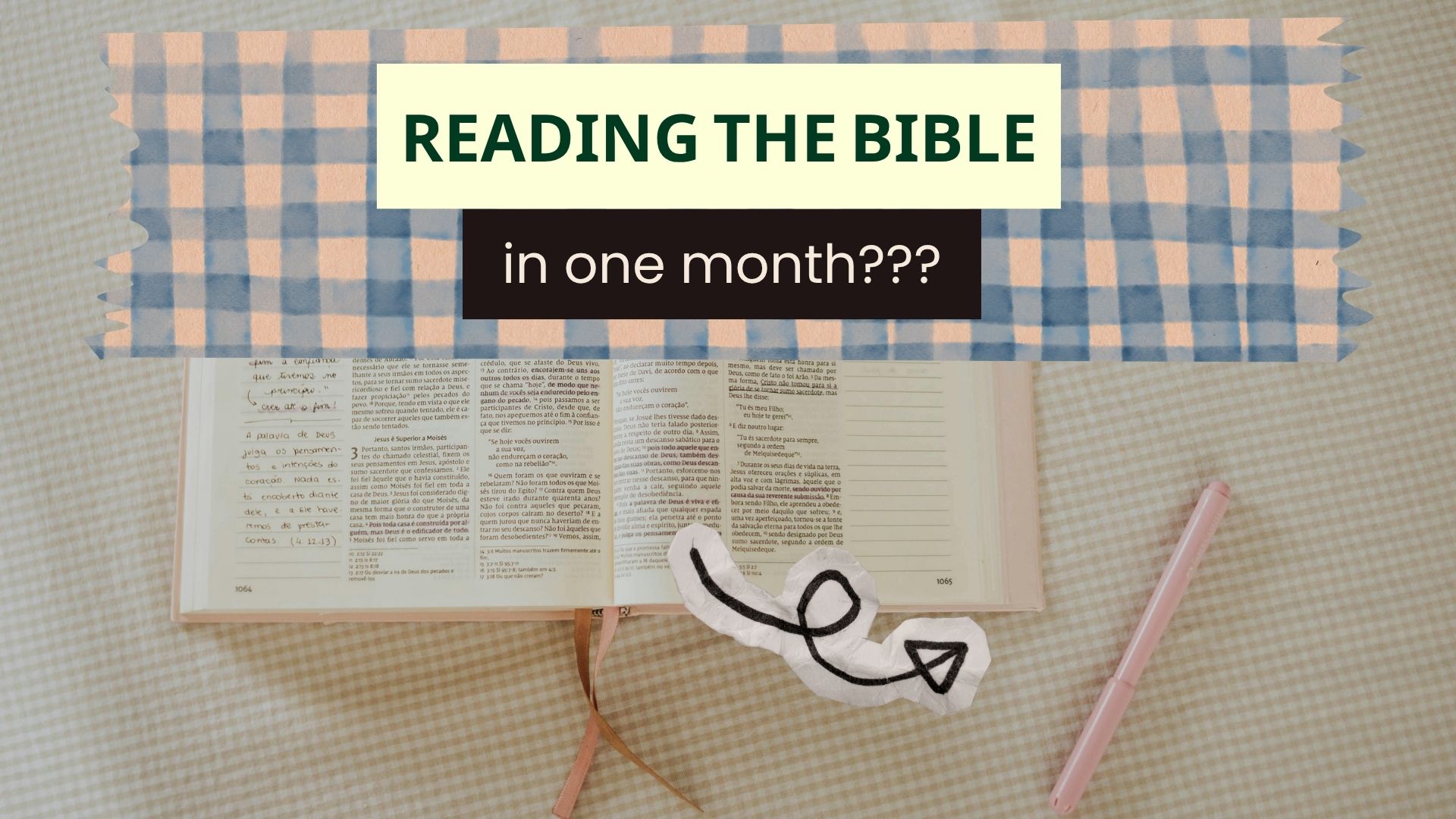
At the start of this year, I did something that sounded simple but quietly rearranged my life. I tried to read the entire Bible in one month. No, no this is not as a flex, nor to be dramatic. But because I was curious, and honestly, a little hungry.
I had just finished a read-the-Bible-in-one-year challenge, and I came across a reel where a man shared that he reads the monthly plan every year. The plan was called RAVAH—a Hebrew word meaning to oversaturate. That word stuck.
Read till the end to see how I managed it.
January felt like the right time, a chance to start on a clean slate. A new year, so to speak.
So I wondered: What would happen if I intentionally oversaturated myself with God’s Word before the year even began? Would it shape my thinking? My discipline? My spirit? Or would I burn out in three days and give up?
So I tried.
What the RAVAH Plan Actually Looked Like
This wasn’t casual reading. The plan involved roughly 20–40 chapters a day. On most days, that meant one full book of the Bible per day. Smaller books were grouped together. Time-wise, it took me about two hours a day:
- Less if I listened to the audio Bible
- More if I was reading with full focus
I read whenever I could; while walking to client meetings. On metro rides. I even had my audio bible on while I got a massage. In moments that would normally be filled with music, scrolling, or overthinking.
And here’s the first thing I didn’t expect…
Reading the Bible Didn’t Add to My Life, It Replaced Parts of It
I didn’t “make time” for this challenge. Time appeared because other things quietly fell away.
I stopped binge-watching Netflix, wasn’t listening to random music, nor was I sitting idle or mentally spiraling. There simply… wasn’t room.
Reading was far more immersive than listening. When I read, my mind had to slow down. When I listened, it became a companion, especially while traveling outside my home.
After the challenge, I already knew: If I’m listening casually, it will be Psalms (Book 2) or Proverbs. Those books travel well. And surprisingly, it was never boring!
I was also making connections between the books of the bible on my own. For example, I noticed Judges 19 suddenly echoed Saul’s story, repeated themes, “types” of Christ. Immersively reading the bible showed me patterns.
I found myself asking better questions. I noted my doubts, and was looking things up. Recalling verses and stories during Bible studies became so easy. People around me were pleasantly surprised I knew things 😛
Above all, it felt like my mind was awake!! #WOKE
The Part Where Life Interrupted (and I Didn’t Quit)
About midway through, I had a scheduled pop salon tour in India. Visiting multiple cities within 10 days – Mumbai, Pune, Chennai, Coimbatore. Ten days of travel, standing on my feet all day. Giving myself completely to my clients, engaging up to two hours with each one, and loving it.
Ironically, despite of this kind of rigourous working schedule, I actually read more during my travel. I was alone, in transit, with long stretches of quiet. But before and after the trip, I needed recovery time. Real downtime complete with long naps, day dreaming, stepping back into my normal routine.
When the dust settled, I realized I was 10 days short of completing the challenge. Old me might’ve felt disheartened. Like I failed the assignment. But my friend Katie, God bless her, she said something simple:
“So you didn’t read it in a month. You read it in 40 days.” (Note: this number is so significant in the bible)
That reframed everything. I wasn’t doing this for a title nor was I doing this for discipline brownie points. I was doing this for the Lord’s sake. So I kept going.
What I Wanted to Slow Down and Sit With
Interestingly, once I removed the pressure of speed, certain books began calling for attention.
I wanted to deep dive, not rush.
- The relationship between Saul and David in 1 & 2 Samuel
- The Book of John, especially.
The things Jesus said. The things He did. The way His actions mirrored, more so completed the Old Testament patterns and laws. Jesus wasn’t random. He wasn’t detached from history. He was fulfilling it.
And that changed how I read everything.
The Biggest Realization I Walked Away With
Here’s the truth no one really says out loud: The Bible is so dense it could take multiple lifetimes to fully study it all.
But reading it? That’s doable. Even in a month or two.
What’s not easy is the quieting of the mind.
To read this much Scripture, I had to:
- silence internal noise
- stop multitasking
- let meaning form slowly
This wasn’t about speed reading. It was about attention. And attention is spiritual discipline.
So… Would I Recommend Reading the Bible in One Month?
Yes, and no.
I wouldn’t recommend it as a spiritual badge of honor.
I wouldn’t recommend it without flexibility or grace.
But I would recommend it if:
- you’re coming off a longer reading plan
- you want a macro view of Scripture
- you’re curious what saturation does to your thinking
- you’re willing to let other distractions fall away
Because reading the Bible in one month didn’t make me holier. It made me quieter, more attentive. More aware of patterns, both in Scripture and in myself. And that alone was worth it.
FAQs
What is the RAVAH Bible plan?
RAVAH is a high-volume Bible reading plan designed to oversaturate yourself in Scripture over a short period of time. The goal isn’t deep study, but immersion and familiarity.
Is reading the Bible in one month realistic?
Yes, if you’re willing to dedicate 1.5–2 hours a day and reduce other forms of consumption like late night parties, drinking, TV, music, and scrolling.
Is listening to the audio Bible as effective as reading?
Both have value. Reading felt more immersive and mentally demanding, while listening worked well during travel and movement.
Did this replace Bible study?
No. Reading gave context and familiarity, but it actually created hunger for slower, deeper study afterward.
Would you do it again?
Not constantly, but yes, strategically. Especially at the start of a new season or year.
PIN IT!