Have your curls suddenly gone limp after living in a bun life this week? Wearing tight ponytails or other hairstyles? Don’t panic.
Sometimes curly hair simply needs a little help getting back into its natural rhythm.
I’ve had this happen to my own hair after wearing it in a bun for a couple of days. Life gets busy, and sometimes curly hair takes a back seat!
The good news is that you can often refresh stretched-out curls and bring back the boing in your natural curl pattern with the right combination of cleansing, protein, hydration and styling.
But let’s set one expectation right from the beginning:
You can enhance your natural curl pattern. You cannot change your natural texture.
Why Do Curls Become Limp and Stretched?
There are many reasons your curls may suddenly look wonky.
Tight hairstyles like buns and ponytails can temporarily stretch the curl pattern. Brushing or manipulating curly hair aggressively can do the same.
Another possibility is that your hair isn’t responding well to your current product routine.
If you’re layering lots of heavy, moisturizing products onto hair (that doesn’t need them), your curls can become weighed down and lose their bounce.
Not clarifying your hair regularly enough can also contribute to buildup and limp-looking curls.
And sometimes, your hair simply needs more support to improve the way it holds its shape.
That’s where I like to look at elasticity, protein and styling technique rather than immediately reaching for more moisture.
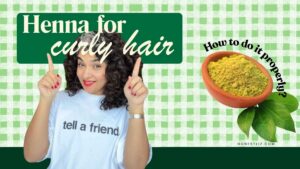
Step 1: Refresh With a DIY Amla Rinse
The first step in this routine is a simple DIY amla rinse.
Amla, also known as Indian gooseberry, has been traditionally used in Indian hair care and is a staple ingredient in many natural hair routines.
For this particular routine, I use it as a quick rinse before styling.
How to Make the Amla Rinse
You’ll need:
- 2 tablespoons amla powder
- Warm water or hair tea
Mix the amla powder with enough warm water or hair tea to create a smooth, pourable liquid.
You can also add the amla mixture to your clay treatment if that’s part of your routine.
How to Apply It
- Rinse your hair first.
- Apply the amla mixture to your scalp and work it through your hair.
- Leave it on for 3–5 minutes.
- Rinse thoroughly with lukewarm water.
I wouldn’t leave it on for significantly longer simply because you think more time will give you better results. It can leave your hair feeling dry.
The purpose here is to give your hair a quick refresh before moving on to styling.
Step 2: Use Protein to Support Elasticity
Once your hair is clean and prepped, it’s time to think about your styling products.
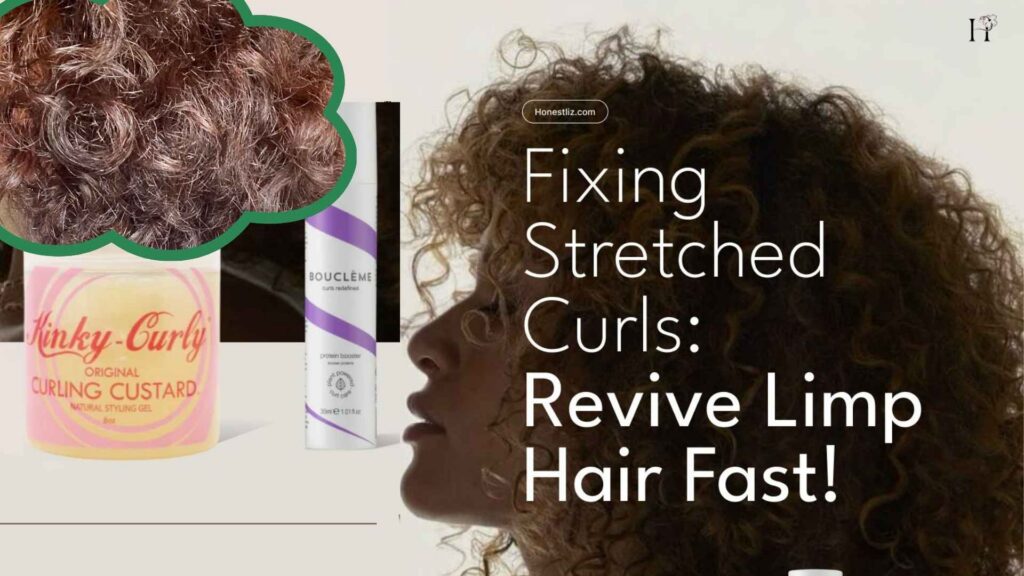
For this particular routine, I used Kinky-Curly products (both protein-free) paired with Bouclème Protein Booster Drops (discount code: HONESTLIZ15).
The idea is to combine your regular styling routine with a little additional protein support.
And here’s the important part: You don’t necessarily need these exact products.
If you’re trying to bring back elasticity to stretched-out curls, you can work with the protein-containing styling products you already have.
If you’re unsure which products are appropriate for your hair, that’s exactly why I created my Curly Hair Products Guide.
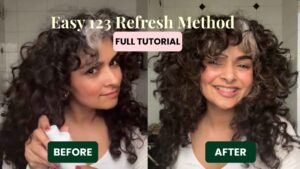
Step 3: Style Your Curls
Now comes the fun part!
1. Prep Your Hair
Apply a lightweight leave-in conditioner to damp hair.
If you’re using the Bouclème Protein Booster Drops, mix them into the product before applying, following the product’s directions.
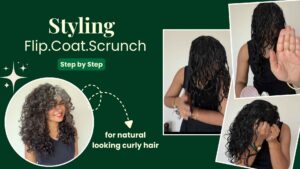
This is also the stage where you can finger coil, brush style, OR simply Flip-Coat-scrunch your hair.
Choose the technique that works best with your natural curl pattern.
2. Add Curl Definition
Apply your curl cream or gel to define your curls.
And here’s one of my biggest styling tips: Add more water.
Don’t underestimate how important water is when you’re styling curly hair.
Your products need enough water to distribute properly and help your curls form into cohesive clumps.
3. Scrunch
Gently scrunch your hair upwards with your hands.
This encourages your natural curl or wave pattern to spring back into shape.
4. Dry Your Hair
You can either allow your hair to air dry or use a diffuser.
If you want more volume and faster drying, I generally prefer diffusing.
How to Make Your Curls Tight Again
If you’re wondering, “How do I get my curls to bounce back?”, start by asking why they’ve become stretched out in the first place.
If your curls were temporarily stretched by a bun, ponytail or brushing, the right combination of water, styling products and technique may help them return to their natural pattern.
If your hair consistently feels limp and lacks bounce, however, look at your entire routine.
- Are you using too many heavy moisturizing products?
- Do you have buildup?
- Are you using enough hold?
- Does your hair respond well to protein?
- Are you manipulating your curls too much?
- Are you giving your hair enough time to fully dry?
These questions can tell you much more than simply buying another “curl defining” product.
Protein vs. Moisture: Don’t Assume Your Hair Always Needs More Moisture
This is something I talk about often with my clients.
We’re constantly told to moisturize curly hair. And yes, curly hair often benefits from adequate hydration. But more moisture isn’t automatically better.
If your hair is repeatedly coated in rich, heavy products that it doesn’t need, your curls can lose volume and definition.
That’s why I like to think about balance. Your hair may need hydration, it may need protein or a thorough clarification. It may need more hold Or it may simply need a break from being manipulated.
Pay attention to what your hair is telling you.
Can This Routine Change Your Curl Pattern?
No, and this is one of the most important things to understand. This routine can enhance your natural curl or wave pattern and help temporarily stretched curls bounce back.
It cannot turn naturally loose waves into tight 3B curls. If your natural texture is wavy, you’re going to enhance your waves. If your natural texture is curly, you’re working with the curl that’s already there.
Your hair texture, density, porosity and current condition all influence how your hair responds. So don’t compare your results to someone else’s.
The goal isn’t to create a curl pattern you don’t have.
The goal is to help your own hair look and feel its best.
What If Your Curls Still Won’t Bounce Back?
If you’ve tried everything and your curls remain unusually limp, don’t keep piling on more products.
Take a step back.
Clarify.
Simplify your routine.
Look at your styling technique.
Consider whether your hair needs protein or moisture.
And if your curl pattern has changed significantly and doesn’t seem related to styling, consider other factors such as chemical processing, heat damage or changes in your overall health.
Sometimes the answer isn’t another product.
Sometimes it’s understanding why your hair changed in the first place.
Watch the Full Tutorial
Want to see exactly how I brought my stretched-out curls back to life?
Watch the video: How I Revived My Limp, Stretched-Out Curls
In the video, I show you the complete process; from the amla rinse through styling and drying.
Final Thoughts
Stretched-out curls happen. Sometimes it’s because you’ve been wearing your hair in a bun all week. Or it’s product buildup. Sometimes it’s too much manipulation. And sometimes your hair simply needs a different balance of hydration, protein and hold.
Don’t panic when your curls don’t look perfect. Learn to listen to your hair.
The right routine isn’t about forcing your curls into submission. It’s about understanding what they need and using techniques that work with your natural pattern. And when you finally get that bounce back?
Enjoy it.
Then leave your curly hair alone and go live your life to the fullest❤️
Your Next Step
If you’re constantly experimenting with products because you don’t know what your curls actually need, my Curly Hair Products Guide can help you simplify your routine.
Or, if you want personalized help understanding your hair’s needs, 1:1 Curl Coaching is available worldwide.
Because sometimes you don’t need more curly hair products. You just need to understand which ones your hair actually needs.