One of the best ways to fight Humidity? Add Protein to Your Curly Hair Routine.
Let’s talk frizz, humidity, and the advice we’ve all heard a hundred times:
Co-wash more.
Deep condition more.
Add more hair gel.
Yada yada yadaaa.
Here’s my honest take after years of personal trial + thousands of curly hair consultations: you don’t need to spend thousands of dollars or turn washday into a 6-hour event.
Instead, focus on these three realistic, effective shifts:
- Accept that some frizz is normal and focus on managing it, not eliminating it.
- Pre-poo intentionally to prepare your hair before cleansing.
- Add protein on purpose — not randomly.
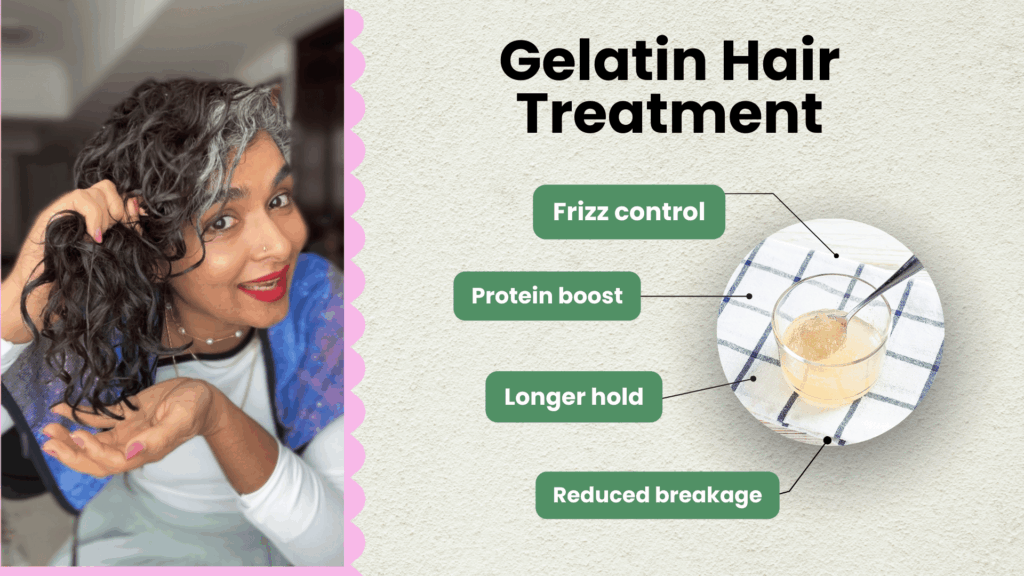
And today, I’m showing you a budget-friendly DIY protein treatment that actually works: the Gelatin Hair Mask.
Why Do a Gelatin Treatment at All?
“But Liz, isn’t hair already made of protein? Aren’t my regular products enough?”
Good question.
Yes — hair is made of protein. But sometimes your diet, styling habits, or product routine don’t replenish what your hair is losing, especially if you:
- Live in humid weather
- Use heat or color
- Over-moisturize
- Wear your hair in a bun all the time
As curl educator Lili explains:
“The only hair type that truly needs protein is heat- or chemically-damaged hair. Virgin hair usually doesn’t need protein — but that doesn’t mean it can’t benefit from it.”
Here’s the key: protein helps attract and retain moisture, improving balance, elasticity, and curl definition — especially in humidity.
I was skeptical too (hello, protein-sensitive curls 🙋🏽♀️), but this DIY completely changed my mind.
Signs Your Hair Might Need Protein
You may benefit from a protein treatment if:
- Your hair feels too soft, limp, or mushy
- Curls won’t hold definition
- Hair stretches but doesn’t spring back (no “boing”)
- Your washday results don’t last
Ask yourself:
- When was the last time I used a protein treatment?
- Do my current products already contain strong protein?
- Is my hair fine, wavy, or damaged (these often need protein sooner)?
There’s no one-size-fits-all — it depends entirely on what you’ve been doing to your hair.
Gelatin vs Rice Water: A Quick Comparison
Rice Water
- Very mild protein
- Great for frequent use
- Learn more in my Rice Water Guide
Gelatin
- Contains hydrolyzed protein (stronger)
- Works fast
- Ideal as an occasional reset
This gelatin DIY has been around for years — shoutout to @risasrizos (2015!)
⚠️ Important: This is a strong treatment. I recommend using it once every 6–8 weeks, max.
Why I Use a Gelatin Hair Mask
I mostly use protein-free products on my coarse hair, so I know when my hair needs a boost.
For me, the signs are clear:
- Curls look elongated instead of springy
- Dry out faster than usual
- Feels rough and lifeless
That’s when gelatin gets my attention — even though I’m not a DIY person.
What it helps me with:
- Improving curl pattern (tighter, bouncier curls)
- Longer-lasting moisture (washdays that last days!)
- Better elasticity (less breakage)
How I Do My Gelatin Treatment (Step-by-Step)
You’ll Need:
- Gelatin powder (unflavored)
- Hot water
- Apple cider vinegar (ACV)
- Bowl (for bowl method)
My Method:
- Start on clean hair (after shampoo or co-wash).
- Dissolve 2 teaspoons gelatin in hot water (add more if you need a stronger treatment)
- Let it cool slightly, and add equal measure of ACV
- Use a gentle shampoo
- Apply using the bowl method, coating curls evenly. (option to leave it in up to 20 minutes depending on how much your hair needs this treatment)
- Rinse with warm water.
- Deep condition immediately.
- Style as usual or with more moisture products if you have coarse hair.
📹 Watch the video below to see the exact sequence.
Low vs High Gelatin Dose (This Matters!)
Most videos use the entire packet — I don’t.
Why I Use a Low Dose:
- Easier application
- No stiff, crunchy hair
- No cast
- More control
From my research, gelatin can make hair feel hard — but with a lower dose, my curls felt strong, not stiff.
Pro Tip:
- Thicker, jelly-like consistency = higher protein
- Softer feel = lower protein
Your hair will tell you.
Aftercare: What Conditioner Should You Use?
Ideally:
- Use a protein-free deep conditioner to rebalance moisture. I like the Ultra Moisturising Deep Conditioner from Treluxe here (aff link gets you 15% off)
However:
- High-porosity or color treated hair may tolerate a low-protein conditioner
As always — use your discretion.
Can You Mix Gelatin Into a Hair Mask?
Yes, but with caution.
The longer protein sits on your hair, the stronger it becomes. If you’re short on time, you can mix it into a mask — but don’t exceed 20 minutes.
Listen to your hair.
Final Thoughts
This is a $2 DIY that can completely transform limp, frizzy curls when used intentionally.
If you try this gelatin hair mask, share it with a curl friend — and tag me @honestlizhere so I can see your results 💛
Thank you for watching & reading!
Need More Help?
Choose Your Curly Hair Solution
- Basic ($12.99): Curly Hair Product Guide (67 pages)
- Essential ($59): Virtual Curly Cut
- Premium ($97): 1:1 Curly Hair Coaching
👉 Explore your options and get started today
GET IN TOUCH