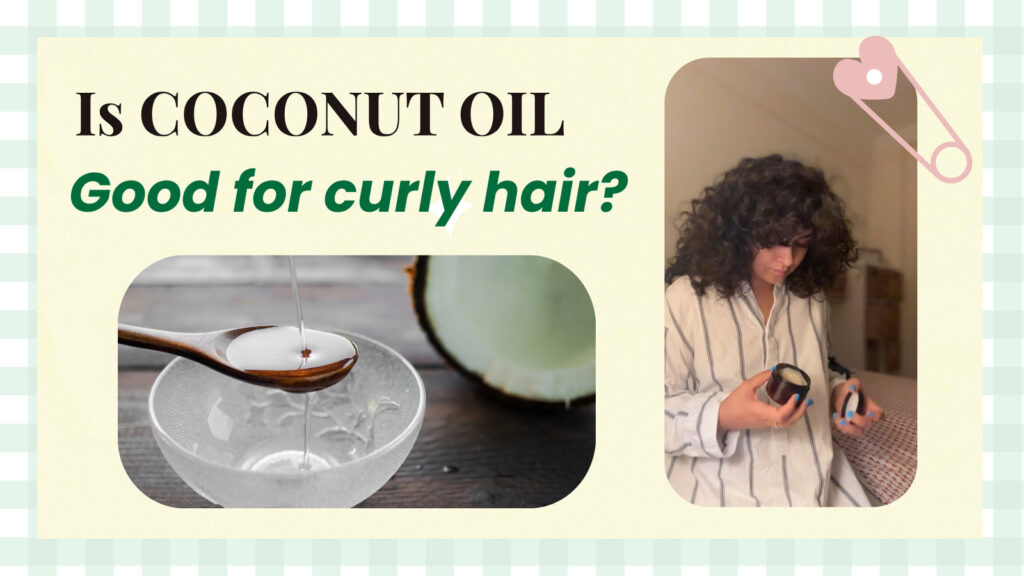
Coconut oil has a lot going for it.
It’s cost-effective, helps with oral hygiene (oil pulling), works as a moisturizer for skin, and is great for cooking. I am from Kerala, India and use coconut oil in our meals all the time!
With all these benefits, it’s only natural to wonder if it’s good for curly hair, right?
Not always.
When I asked my Instagram community, 130 people shared their real experiences, and the results were eye-opening.
Disclaimer: These insights are from my personal experience, direct messages, and client consultations. Authority sources are linked to encourage you to research for yourself.
The Bad Side Effects (Real Responses)
It was tempting to list all the cons, but I want you to notice the small connections that add up.
Hair feels heavy and weighed down.
It is penetrating and moisturizing, but if you use too much, it can sit on top of fine or coarse, low-porosity hair, making it feel heavy.
This often happens if it isn’t cleansed out properly.
It requires a strong clarifying shampoo to remove.
Shampooing too often dries out curls.
If you don’t cleanse oils thoroughly, it builds up, forcing you to reach for strong SLS shampoos—at what cost?
Hair smells weird.
Lorraine Massey once said,
“Hair is like fiber. Imagine your favorite dress soaked in oil and left damp—how would that smell?” Lorraine advises using coconut water instead.
Coconut oil for curly hair can it feel brittle.
This was my first clue. My postpartum hair became unmanageable, and products with coconut oil made it worse.
Coconut oil mimics protein, and too much protein makes hair brittle.
Learn more about this from the Sciency Hair Blog.
It reduces hair swelling and water absorption.
It’s high penetrative ability can leave less space for water to enter the hair shaft, reducing moisture intake.
Coconut oil for curly hair reduces protein loss but can lead to overload.
While it protects against protein loss, this can create an imbalance, leading to dryness, brittleness, and breakage.
My Postpartum Hair Story
When I shared about my postpartum hair changes, it was comforting to receive so many responses from others experiencing the same.
My hair has always been sensitive to high protein curly hair products. And coconut oil, which mimics protein, became too much for my hair to handle during this season. Here’s what I noticed:
- Coconut oil for curly hair is highly penetrative, it leaves less space for water to enter hair.
- Coconut Oil reduces protein loss (but more protein, means less moisture)
- Protein overload makes hair drier, brittle and more prone to breakage.
Lorayn who also has coconut sensitivity, says it’s easy to avoid coconut oil is almost every product except shampoo/cleansers! This is because Coconut is the milder option to harsh sulphates.
Does Coconut Oil Cause Acne?
It can.
Coconut oil is highly comedogenic and can clog pores, worsening acne for some people.
Your scalp has more sweat glands than any part of your body. If you have oily skin or use coconut-heavy products, it may clog your scalp too.
Scalp Issues Reported
Many people in my survey reported:
- Sore, tender scalp
- Painful acne-like bumps near the hairline
- Flaking and buildup
These issues often result from improper cleansing or the scalp’s reaction to coconut oil.
Co-washing may not remove coconut oil buildup effectively, leading to a damp, flaky environment conducive to dandruff and fungal infections.
Since I am SLS-free, I use my DIY clay treatment monthly and love ACV rinses to keep my scalp clear.
Skin Issues Reported
People shared that coconut oil:
- Feels itchy, leading to breakouts
- Dries skin and worsens eczema
- Causes cystic acne
- Triggers eyelid eczema when used as a makeup remover
This isn’t to scare you, but these are real experiences worth considering. Here’s another one from my curl friend Tina Anderson.
How to Identify If Coconut Oil Is the Culprit
- Trust your instincts.
- Check your product labels for Cocos Nucifera (Coconut) Oil in styling products.
Alternate names in shampoos include:
- Coconut Acid
- Hydrogenated Coconut Acid
- Potassium Cocoate
- Sodium Cocoate
- Sodium Cocomonoglyceride Sulfate
How I Use Coconut Oil Now
I have oily, acne-prone skin, so I avoid coconut oil in skincare.
For hair, I use shampoos with coconut derivatives but avoid coconut-heavy styling products.
If coconut oil is in the first five ingredients, it likely has high amounts. If it’s lower on the list, it’s usually minimal.
Is Coconut Water Okay?
If you want to try coconut water in your hair routine, patch-test a curl clump (preferably at the nape of your neck) to see if it suits you.
Final Thoughts
Coconut oil isn’t bad for curly hair, but it can be problematic for some.
If you’re unsure, try going coconut-free for a few washes and see if your hair and skin feel better.
Do you use coconut oil sparingly, or avoid it completely?
Leave a comment below—I would love to hear your experience.
Thank you for reading and for being part of this journey toward healthier curls.
Meta: Is coconut oil good for curly hair? Learn the benefits, drawbacks, and alternatives for your curls.